BACKGROUND
Childhood
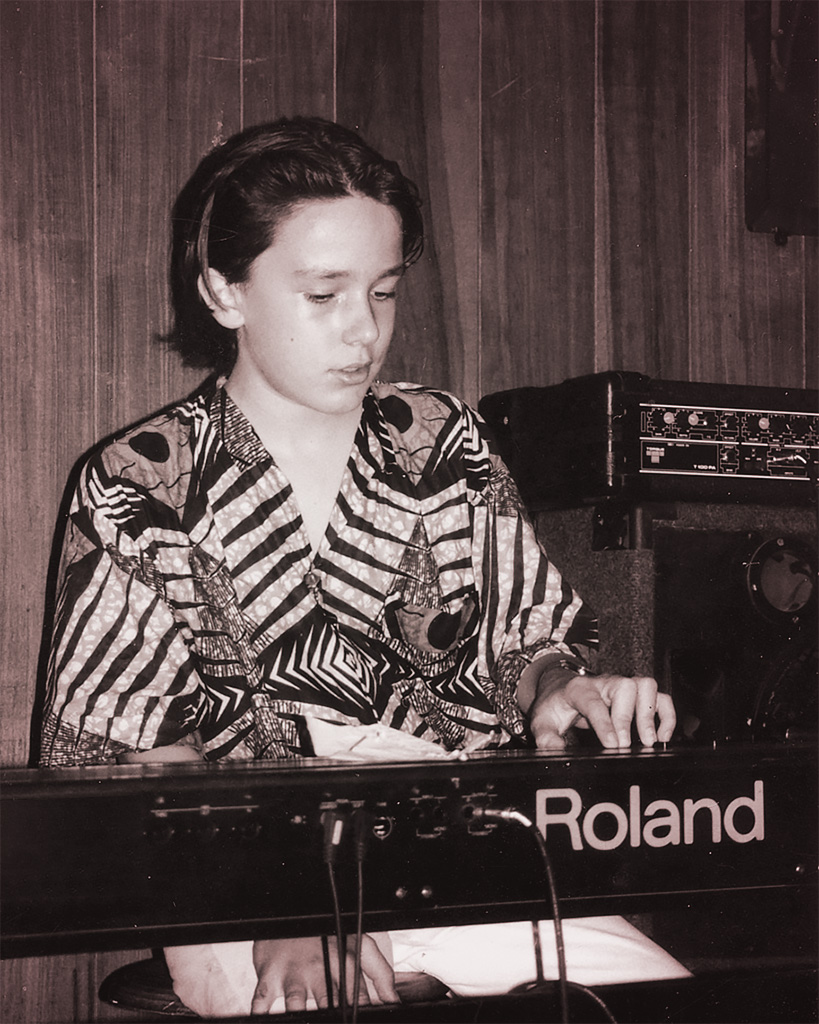
I started piano at around six, first through classical training, before gradually drifting into jazz as I got older. Music was simply always there at home, so it never felt like a decision—more like a direction I naturally followed.
I later completed a music-focused Baccalauréat, with music as my main specialization, which grounded me properly in both theory and practice.
I joined the Conservatoire de Jazz in Lyon under Mario Stanchev, where everything really opened up—harmony, improvisation, and a much more fluid way of thinking about music.
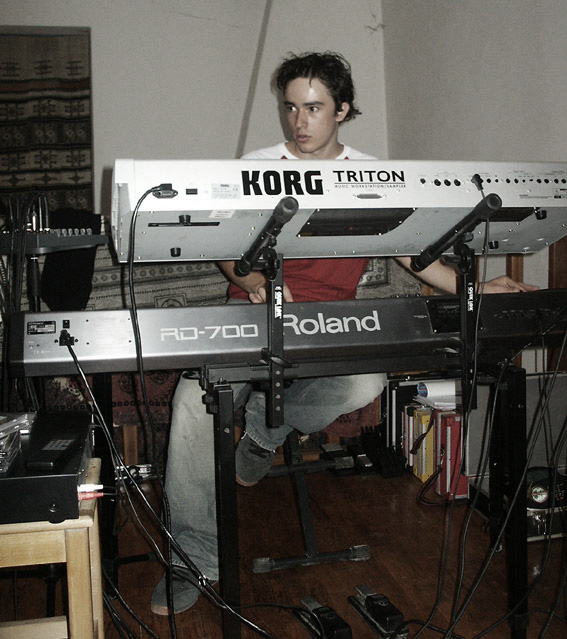
Somewhere along the way, I got a bass guitar for Christmas and later on, a drum kit. Moving between keys, strings and percussion started to shift something fundamental:
Live Bands & Experimentation
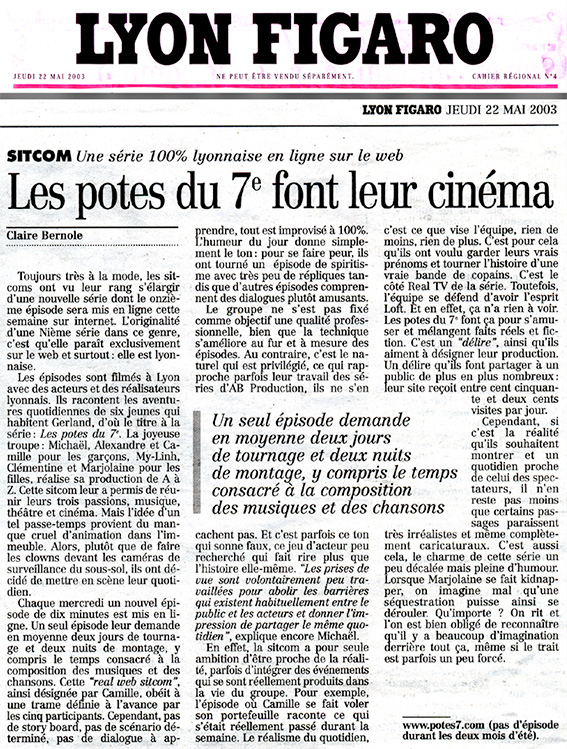
Before fully focusing on composition, I played in several live bands. The biggest turning point was Potes7, the first French web sitcom I also co-directed. At 17, I was writing music for it every week across two seasons and 48 episodes. It was intense, fast, and a bit chaotic in the best way. I had to move quickly, switch genres constantly, and trust instinct more than overthinking. That project also led to my first professional commissions, including work with NRJ Radio.
My musical language draws from a wide range of influences: composers like John Williams and James Horner, jazz figures like Herbie Hancock and Michel Petrucciani, the songwriting of The Beatles, and electronic artists like Deadmau5 and Jamiroquai.
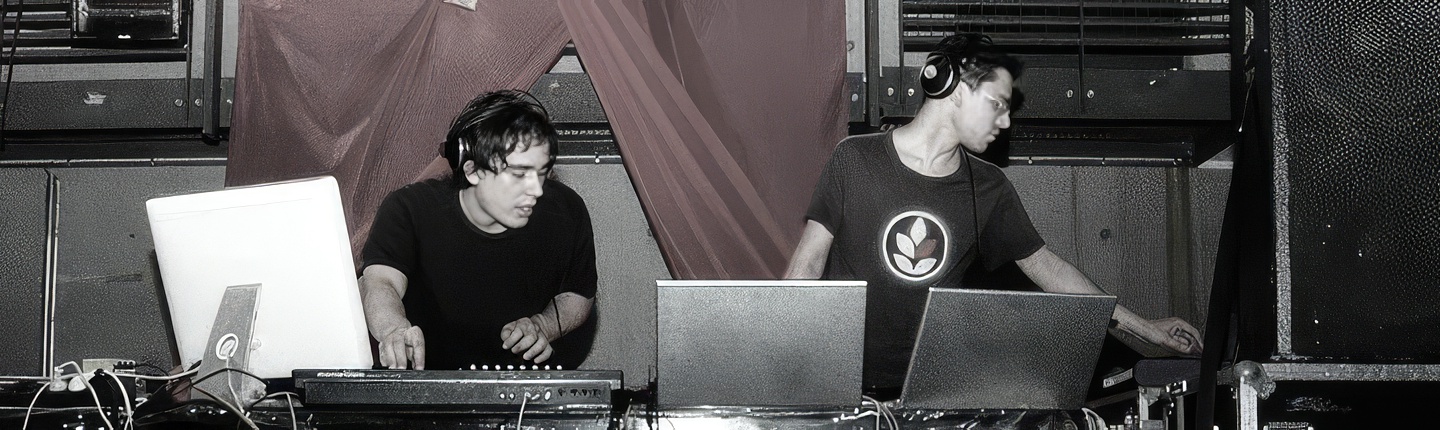
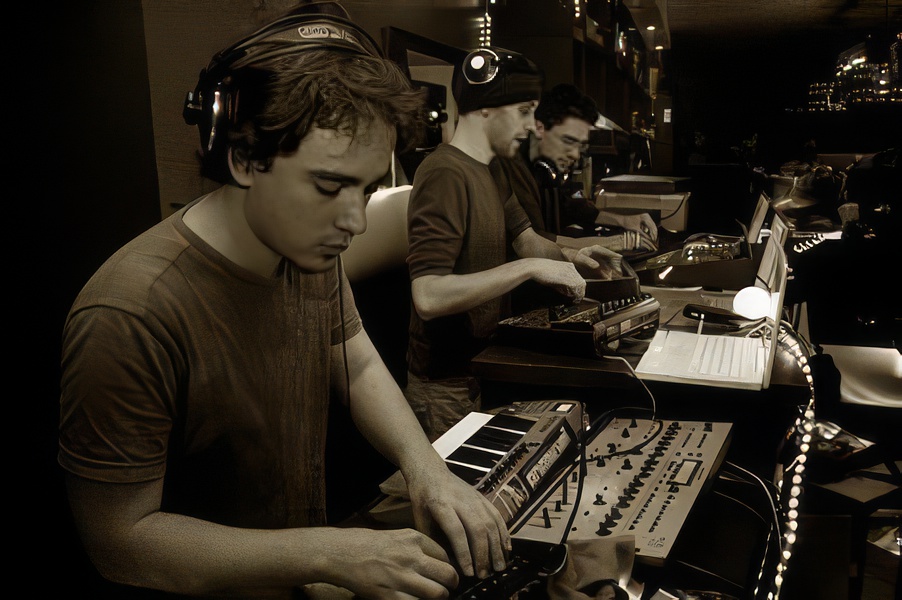
Later came bands like Skwhere, Alienhearts, and Crossover. That period was all about live experimentation—mixing electronic production with acoustic instruments, machines with musicians, structure with improvisation. Playing that way taught me how alive sound can be when it’s performed in real time.
Living in the Netherlands and the Philippines also changed how I see collaboration—music as something shared, not just written.
Sound Design
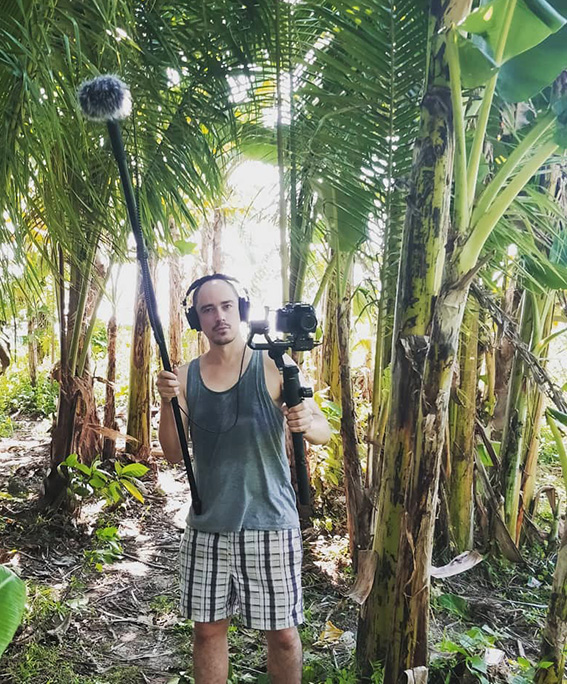
Sound Design: Alongside composition, I developed a strong focus on sound itself. Field recording became central practice, capturing subtle environments such as thin rain, distant rooms, or quiet nights. Some of these recordings, shared for free use, are available for download on Freesound.org.
Electronic projects like Alienhearts and Skwhere pushed this further through pure synthesis, learning to design sound from scratch and treat it as raw material rather than fixed instrument tones.
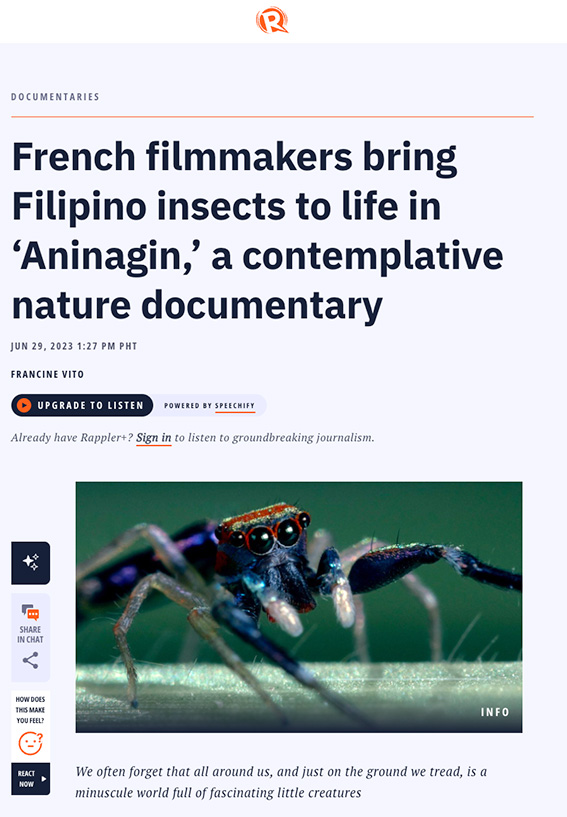
Creating sounds for around 50 insect species on Aninagin significantly strengthened my sound design skills, through experimentation and the use of layered and hybrid techniques.
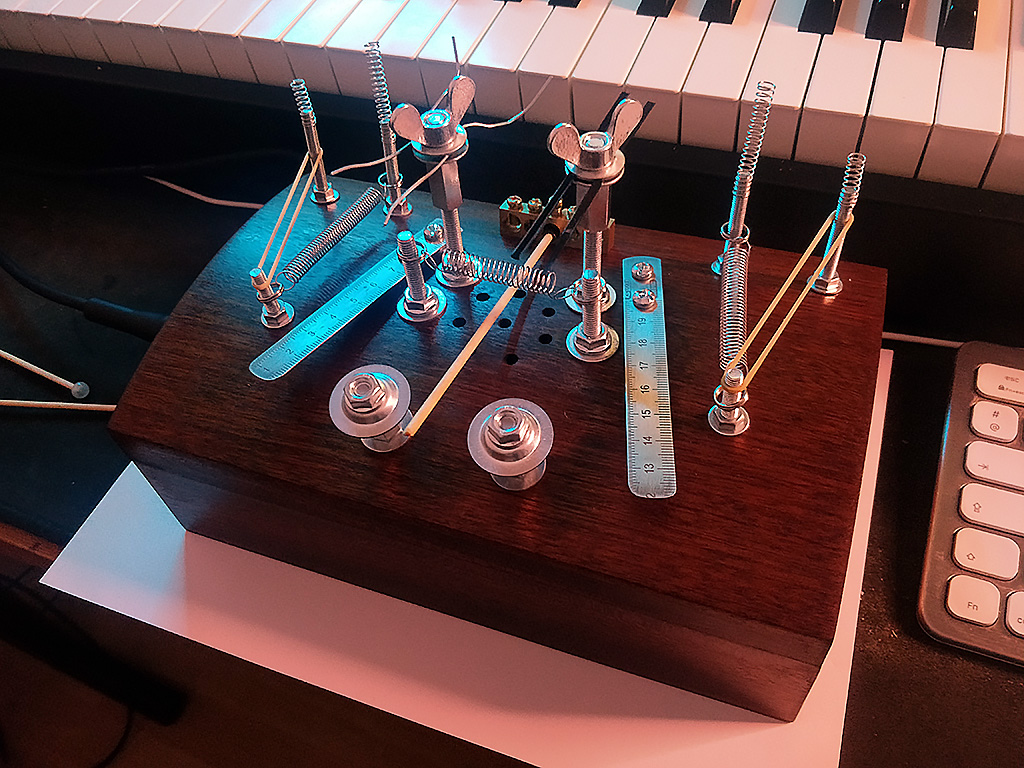
I also became very involved in editing and restoration, cleaning recordings and reshaping fragile audio into something usable and precise. On top of that, I started building “noise boxes”—custom objects fitted with microphones, springs, metal parts, and other materials, designed as physical sound sources. They became a way to generate completely unique textures, somewhere between organically acoustic sources and electronic processing.
Meaningful Work
I’m especially drawn to projects with meaning and intention. This includes Aninagin, a self-funded film for which I created the full score and sound design, aiming to awaken curiosity and awareness for the natural world.
My approach is rooted in listening and understanding the essence of each project, then shaping sound with precision, emotion, and narrative clarity.
At the core, it always comes back to the same thing: listening properly first, then shaping sound until it feels honest, precise, and alive.
Having lived in the Netherlands and the Philippines, I’ve developed a collaborative approach shaped by cultural diversity, where music often becomes a shared language beyond words.
I’m drawn to projects with clear intent. Projects such as Aninagin (IMDb link), a film raising awareness of the natural world and invisible life around us, or Pinow (Youtube Link), an environmental awareness series in the Philippines, reflect that—both rooted in curiosity and connection to the natural world.
PRESS & MEDIA
POTES7 — The First French Websitcom
France 3 (National)
Feature report — “C’est mieux ensemble”
M6 (Lyon)
Feature report — Le 6 Minutes
Europe 2 (Lyon)
Interview
France 2 — “On a tout essayé”
Interview with Laurent Ruquier
NRJ (Lyon)
Interview
Radio Scoop (Lyon)
Live interview — “Pato Show”
Radio Espace (Lyon)
Interview
Fréquence Jazz (Lyon)
Interview
RCT (Lyon)
1-hour interview
Rebroadcast (June 30)
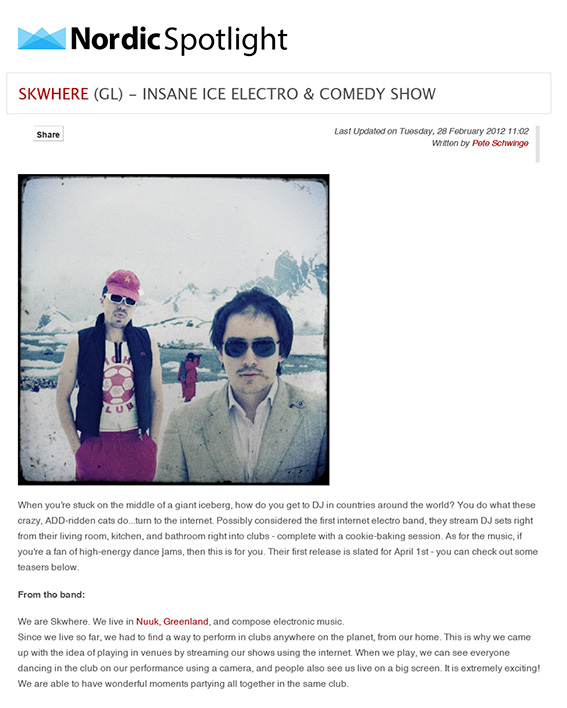
SKWHERE — Cyber Electronic Band
Amsterdam Dance Event (amsterdam-dance-event.nl)
Nordic Spotlight
“Insane Ice Electro & Comedy Show”
Mediamatic — mediamatic.net
Article & Video
LA One — Youtube documentary
ANINAGIN — Film
Rappler
Full article here.
Ici.fr
Listen to the radio interview.
Mediamatic
Article & Video here.
Selection Festival des Possibles
Link here.
Music Creation — Facebook Community
Founder of Music Creation, a 5,000+ member Facebook community focused on music-making as a craft: composition, sound design, production, and process-oriented exchange